
The RixBot robot buggy has had a slight facelift in terms of a new body shell. The original body was constructed to resemble the original Grey Walter Tortoise (Elsie – see below) and due to its size was 3D printed in two parts.
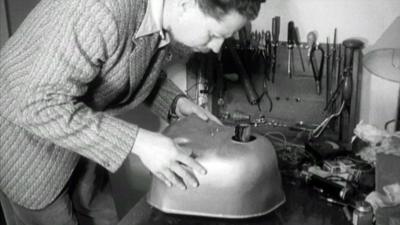
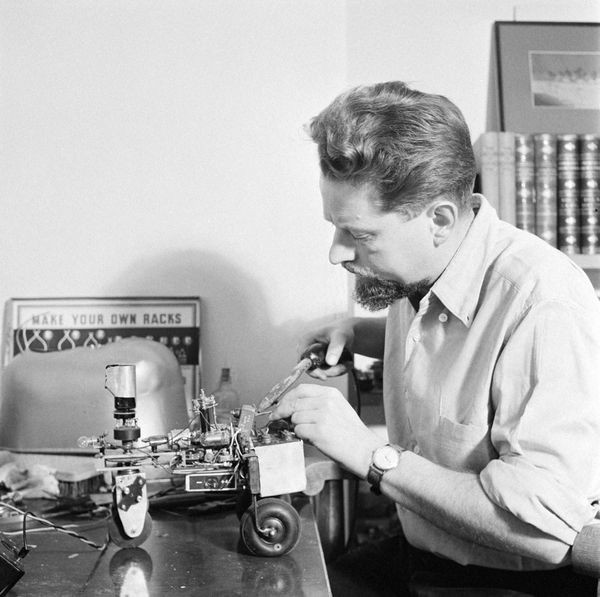
Here is the original RixBot buggy with the grey casing. Note the join between the two parts.
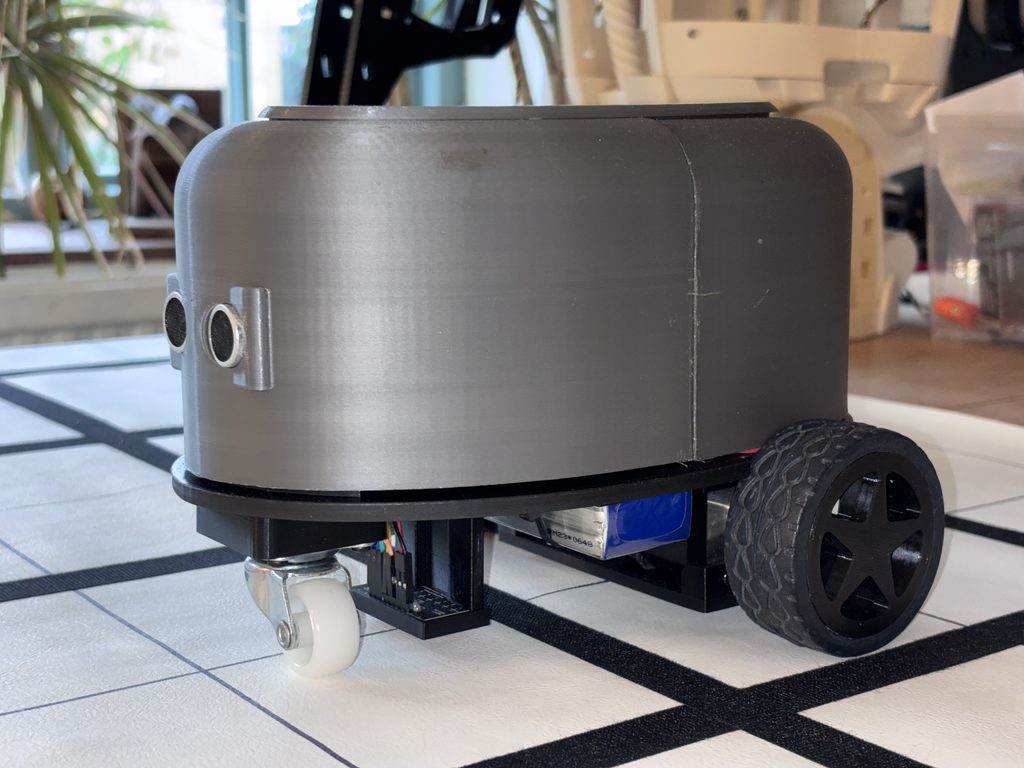
The new body shell is 3D printed in one piece and is a little smaller but has a nicer shape to it:
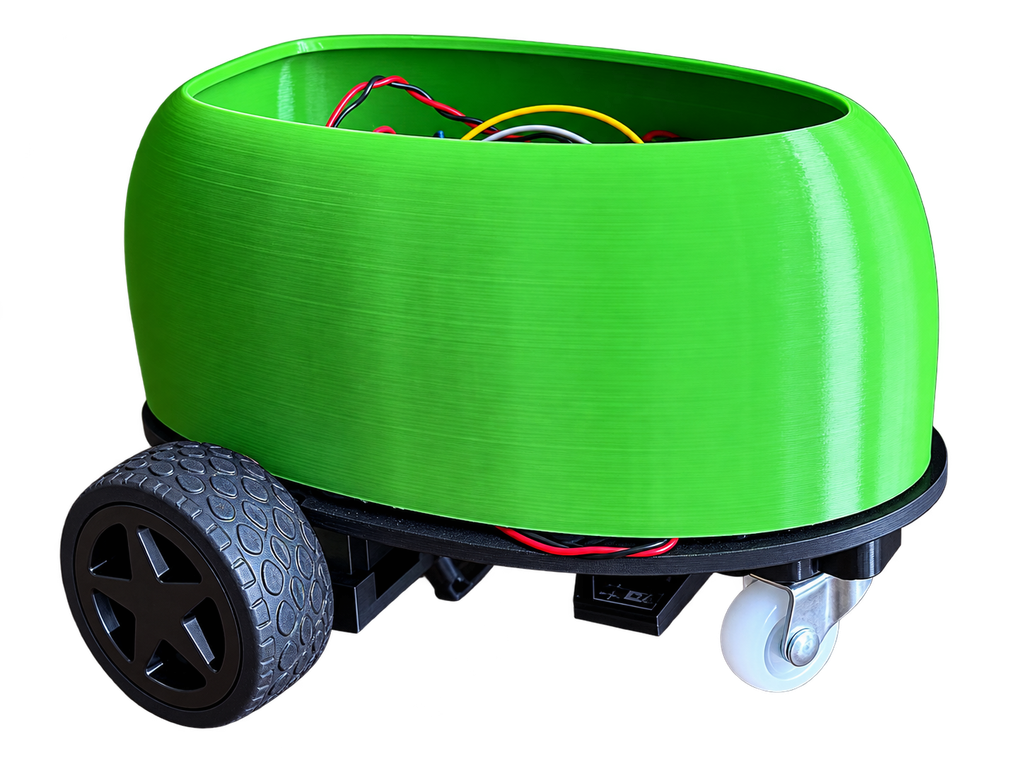
The top for this new design is still being designed, but will be black and have speakers integrated into it, and possibly an LCD display. Aside from the new shell design, the rest of the buggy is pretty much the same.
Where next for RixBot?
Although this is only a relatively minor cosmetic change, RixBot is gradually developing into an experimental platform for our work on Inclusive Human-Robot Interaction. One of the questions we are particularly interested in is how people might communicate with and control robots in ways that do not rely on a single method of interaction.
The next version of the top shell will therefore provide space for speakers (and possibly a microphone), allowing us to experiment with sound and speech as forms of feedback. We are also considering adding a small display that could be used for symbols, simple graphics or other visual forms of communication.
In future experiments we hope to explore different ways of giving RixBot instructions, including conventional controls alongside speech, sounds, gestures, symbols and other multimodal approaches. The aim is not simply to make the buggy more sophisticated, but to use it as a platform for asking a more important question: how can we design robots that adapt to the ways people communicate, rather than expecting people to adapt to the robot?