
The robotics sector continues to evolve at a remarkable pace. While much of the public attention has focused on humanoid robots from companies such as Tesla, Figure AI and Agility Robotics, some of the most meaningful developments are taking place in assistive and rehabilitation robotics. These technologies are increasingly helping people with disabilities achieve greater independence, mobility and participation in everyday life.
The Rise of Smarter Assistive Robotics
A major trend in 2026 is the shift from rigid, pre-programmed robotic systems towards adaptive technologies that can interpret human intentions in real time. Modern systems increasingly combine artificial intelligence, computer vision, biosignal sensing and advanced control algorithms to create more natural human-robot interactions. Researchers describe this as a move toward bio-integrated robotic systems, where the robot works with the user rather than simply acting on them [1]. This trend is particularly evident in wearable exoskeletons, robotic prostheses and rehabilitation systems that can respond dynamically to changes in movement, muscle activity and user intent [2, 6].
Exoskeletons Moving Beyond the Clinic
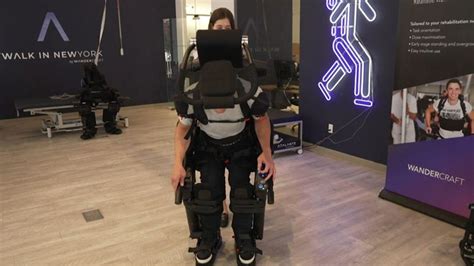
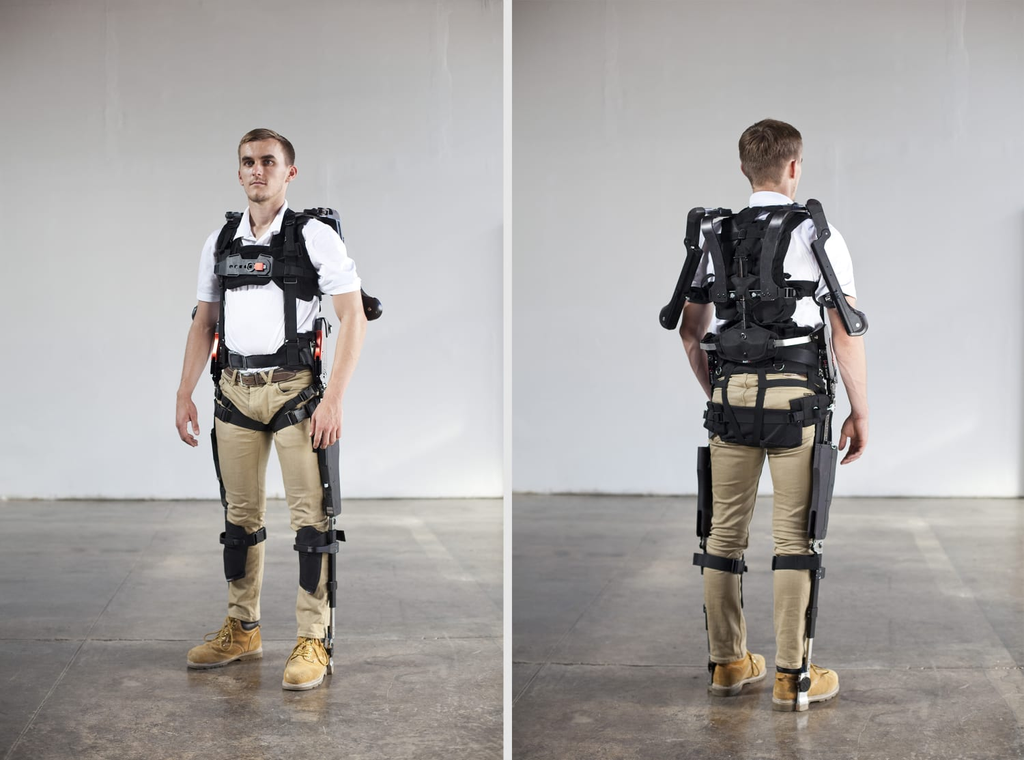
Robotic exoskeletons have been under development for many years, but 2026 has seen significant progress towards everyday use. New systems are becoming lighter, more comfortable and increasingly affordable. For people with spinal cord injuries, stroke-related impairments and neurological conditions, exoskeletons can provide mobility assistance, support rehabilitation and enable users to stand and walk. Recent developments include self-balancing exoskeletons and devices equipped with cloud-connected AI that learn from individual users. Organisations such as Wandercraft and Lifeward are helping to move these technologies from specialist rehabilitation centres into community settings [3]. Researchers are also exploring task-agnostic exoskeleton control systems that use machine learning to provide assistance across a wide range of activities rather than requiring specific programming for each task [6].
Robots Supporting Stroke Rehabilitation
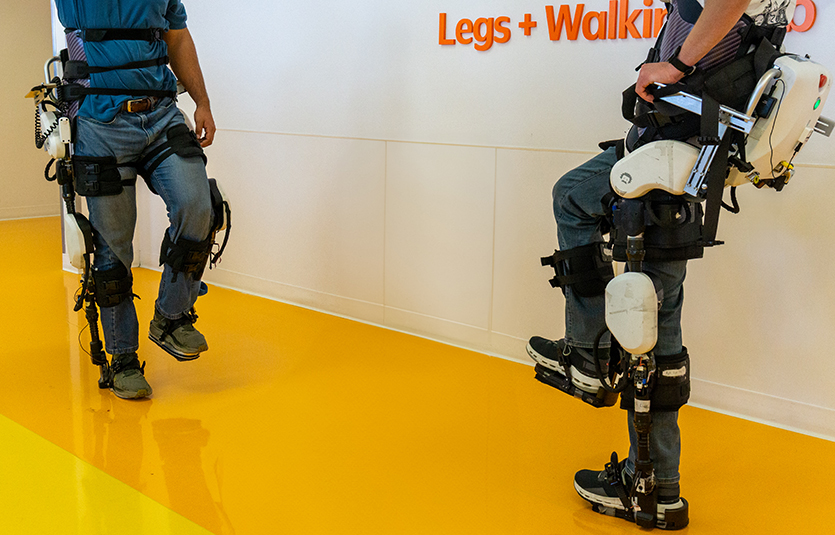
One particularly exciting development comes from researchers at Northwestern University and the Shirley Ryan AbilityLab. Their newly reported system allows therapists and patients to be connected through robotic exoskeletons, enabling therapists to adjust support in real time as patients walk (see large image above).
Early results suggest improvements in joint movement, step quality and muscle activation, potentially providing a powerful complement to traditional rehabilitation approaches. The technology could help extend access to high-quality rehabilitation while reducing the physical burden on clinicians [4].
Independent Living and Social Assistance
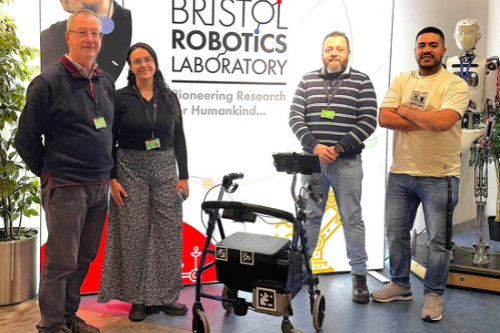
Mobility is not the only area where robotics is making a difference. Researchers at the Bristol Robotics Laboratory have recently developed technologies aimed at supporting independent living for older adults and people with disabilities. One example is the Socially Assistive Walker (SAW), a smart walking frame that incorporates sensors, AI and a virtual companion (top centre). The system can monitor walking patterns, provide navigation assistance, deliver reminders and support day-to-day independence through context-aware interactions. [5] This reflects a broader trend toward “socially assistive robotics”, where robots provide cognitive and practical support rather than purely physical assistance.
Beyond Mobility: New Forms of Accessibility
Researchers are also developing novel assistive technologies that go beyond traditional robotics. Recent examples include:
- Electrotactile systems that enable people with visual impairments to receive environmental information through the sense of touch.
- AI-enhanced prosthetic limbs that can better anticipate user intentions.
- Tongue-controlled and wearable interfaces that allow people with severe motor impairments to interact with digital systems and their environments more independently.
- Soft robotic exosuits that provide movement assistance while remaining lightweight and comfortable.
These developments illustrate how robotics is increasingly focused on enhancing capability rather than merely compensating for impairment [1, 2, 7].
Looking Ahead
The most important robotics story of 2026 may not be humanoid robots performing warehouse tasks or demonstrating impressive athletic feats. Instead, it may be the growing number of individuals who are regaining mobility, independence and quality of life through assistive robotic technologies. As artificial intelligence, robotics and human-centred design continue to converge, we are moving closer to a future in which assistive technologies adapt to people rather than requiring people to adapt to technology.
If current trends continue, the next decade could see robotic assistance become as commonplace and transformative as the smartphone has been over the last twenty years [1, 2, 5].
Sources: Frontiers in Bioengineering and Biotechnology (2026), Frontiers in Neurorobotics (2026), Nature Machine Intelligence (2026), Northwestern Engineering (2026), University of Bristol (2026), and The State of Play (2026).
Images reproduced from: Northwestern and Shirley Ryan AbilityLab (Northwestern University), Bristol Robotics Laboratory (University of Bristol), Haystack News, NBC News, accessed November 2026.