Month: July 2025

  • RixTalk Update

    The new version (technically the next iteration, as it is far from ‘finished’) of the talking ruler is almost ready. New parts have been printed, the stripboard has been soldered together and connectors added to the various parts.

    As there needs to be a wire for each of the touch points on the ruler, which is every 10mm, then it required 16 different ports on the Pico, and therefore 16 single core wires soldered onto the board:
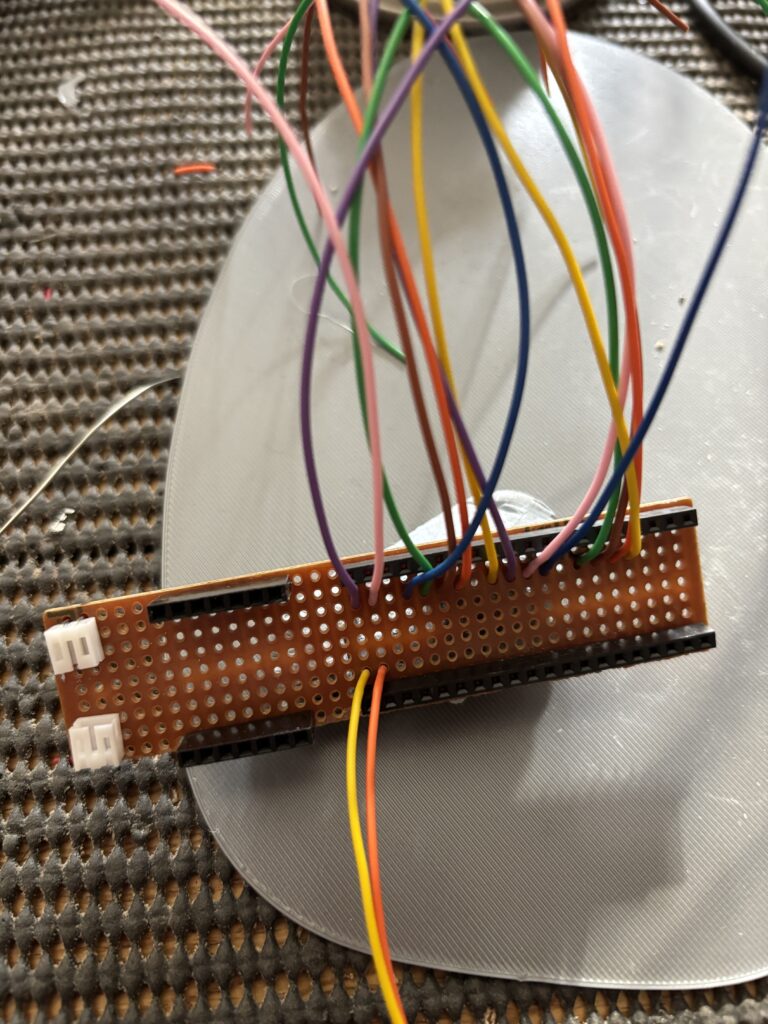
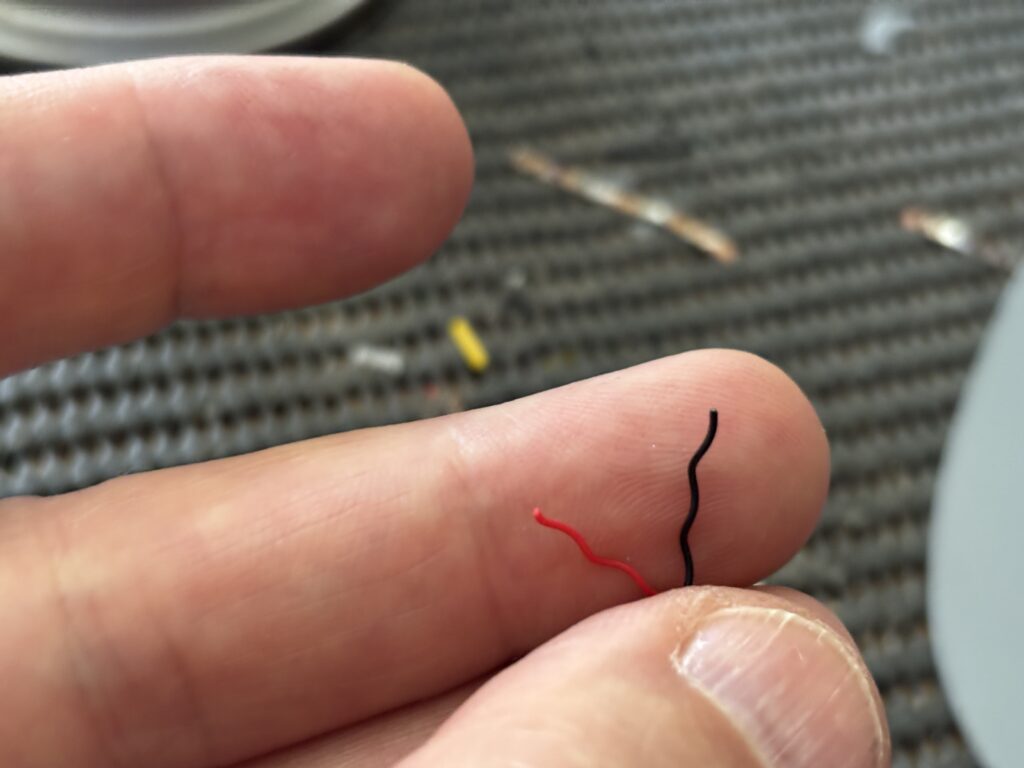
    I actually removed the two connectors at the end of the board and replaced them with ones which pointed upwards, as there was not enough space to insert both plugs. I also added connectors for the speakers. It was quite a challenge adding the plugs, as the speaker wires are only about as thick as a few human hairs:
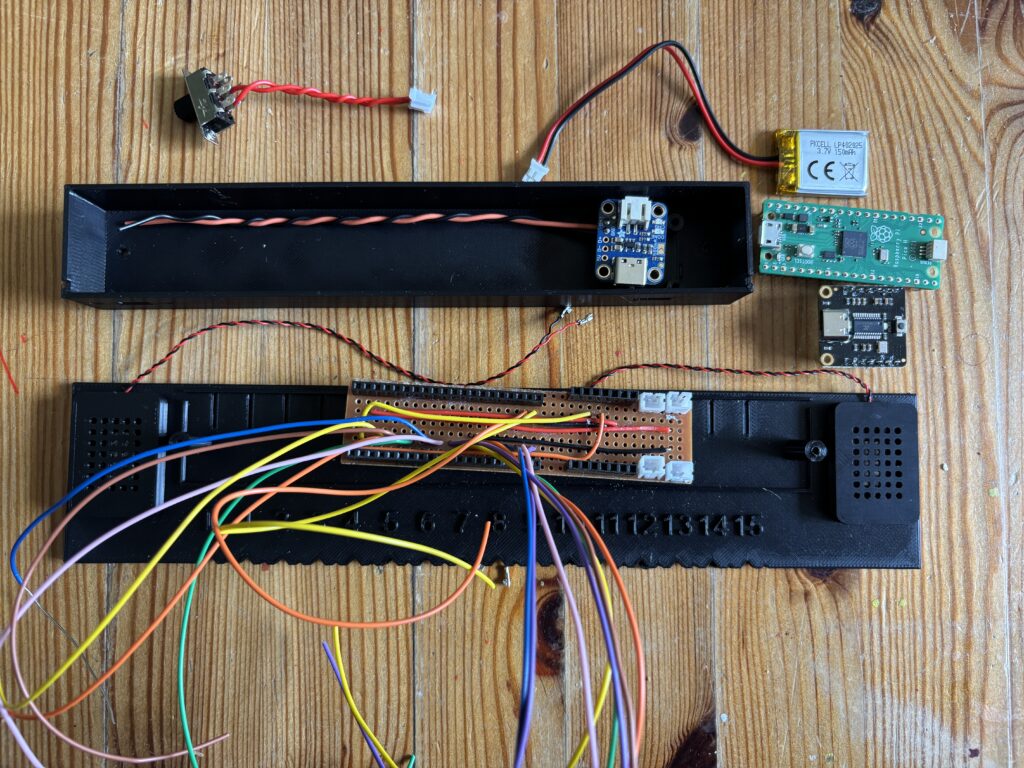
    I photographed the set of components that need to go inside the housing, which you can see will be a challenge to fit – an exercise in shoe-horning:
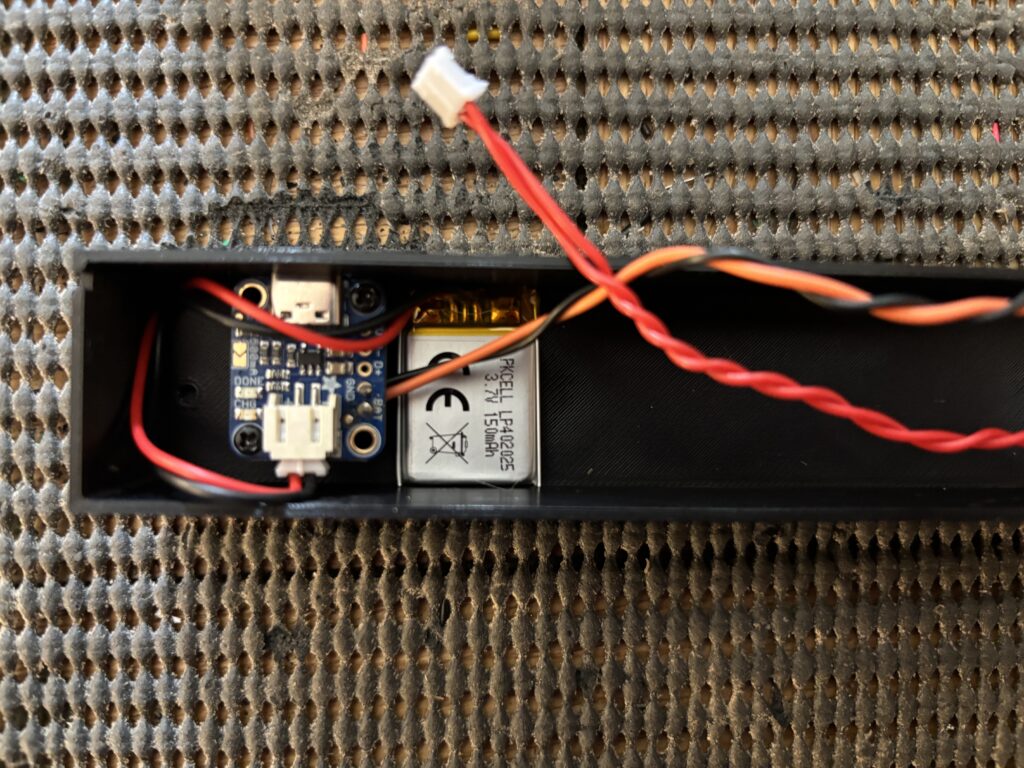
    The new battery and charger unit have been added to the housing, as well as the on-off switch:
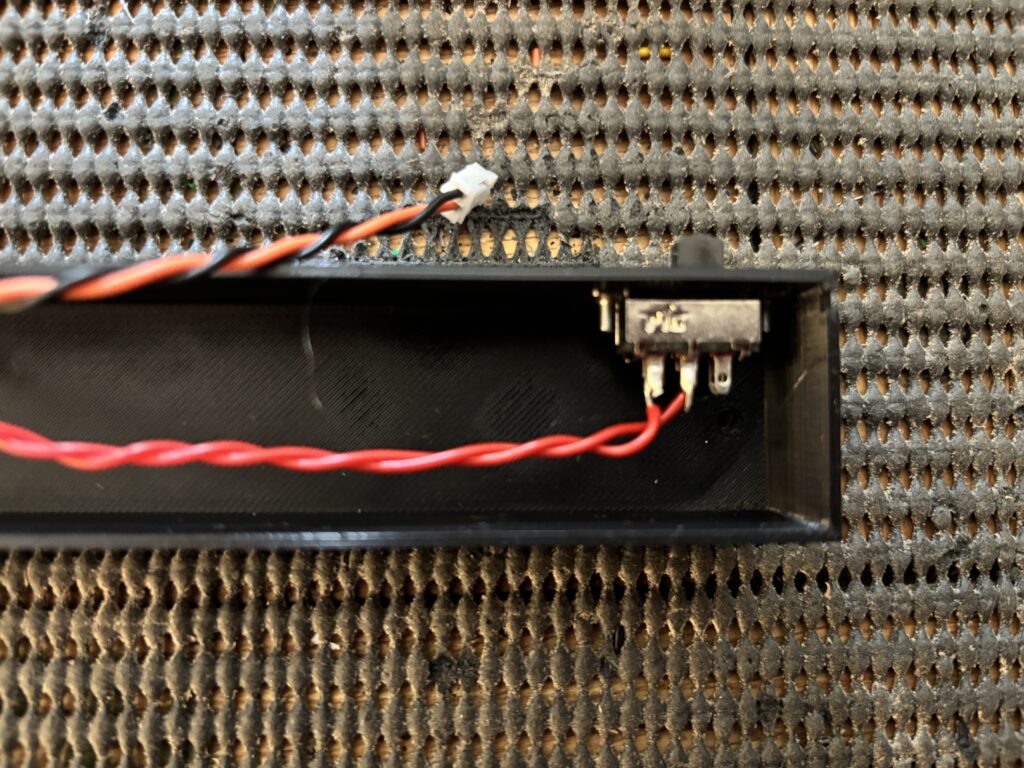
    The on-off switch:
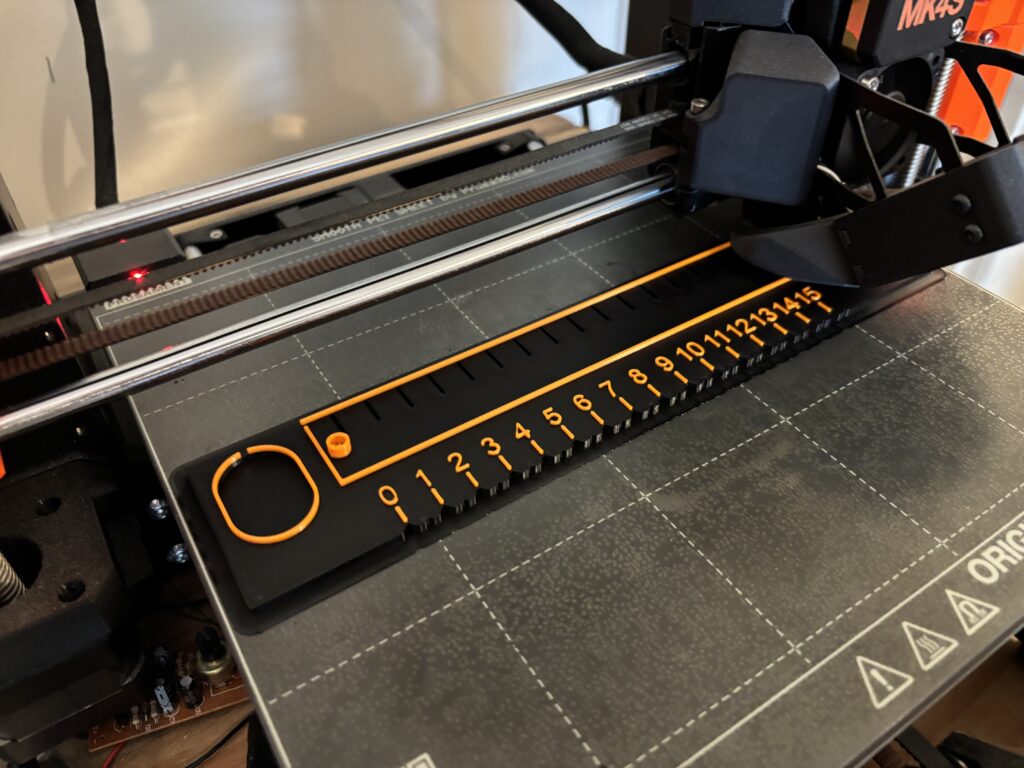
    Once the new housing has finished printing, it’s time for assembly and to see if it all fits together. Note that I chose multi colour filament to make the numbers stand out:
    The assembly of the talking ruler was a little tricky, given the number of wires and components that had to be crammed inside:
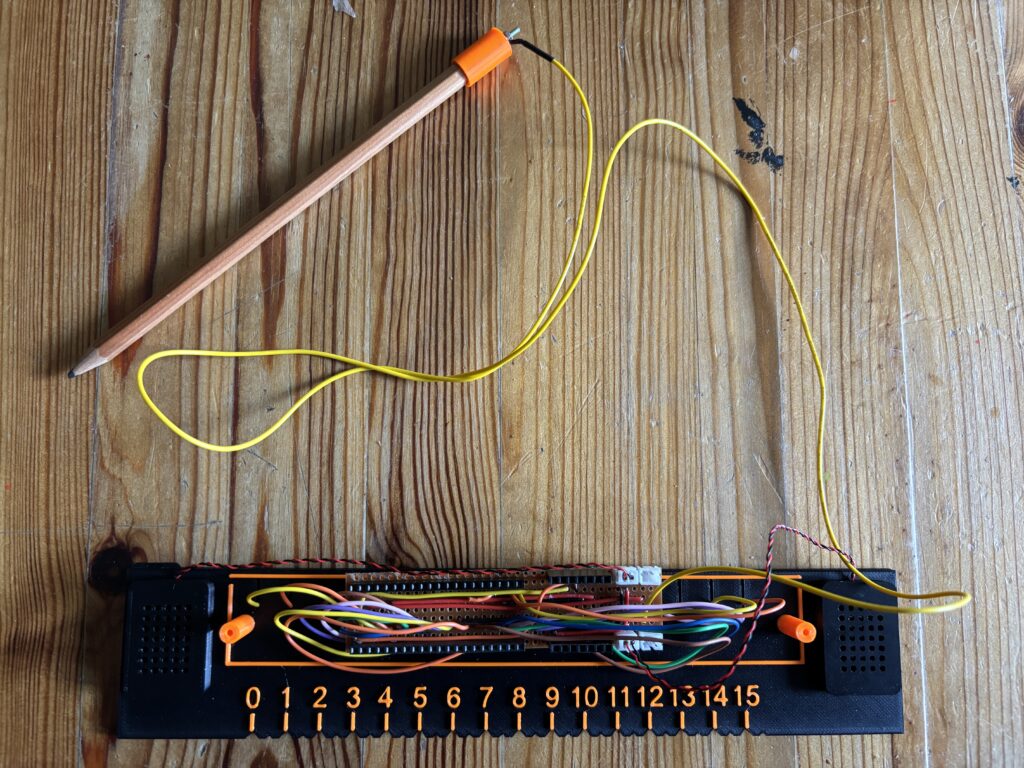
    The working version is shown below:

    You might have noticed that the playback sometimes repeats when holding the pencil onto the contact. This is a limitation of the software – the next version (if there is one) will use a different MP3 player module and be more controllable.

    The next thing to do is find a collection of suitable candidates to try the ruler out and see how well it works, get feedback on possible improvements and write up. If you’d like to participate, or know of someone with a sight impairment that would like to participate, then please do contact me. The user tests will be held in East London (at UEL) and also in Norfolk UK.
  • Wheelchair users Experience VR

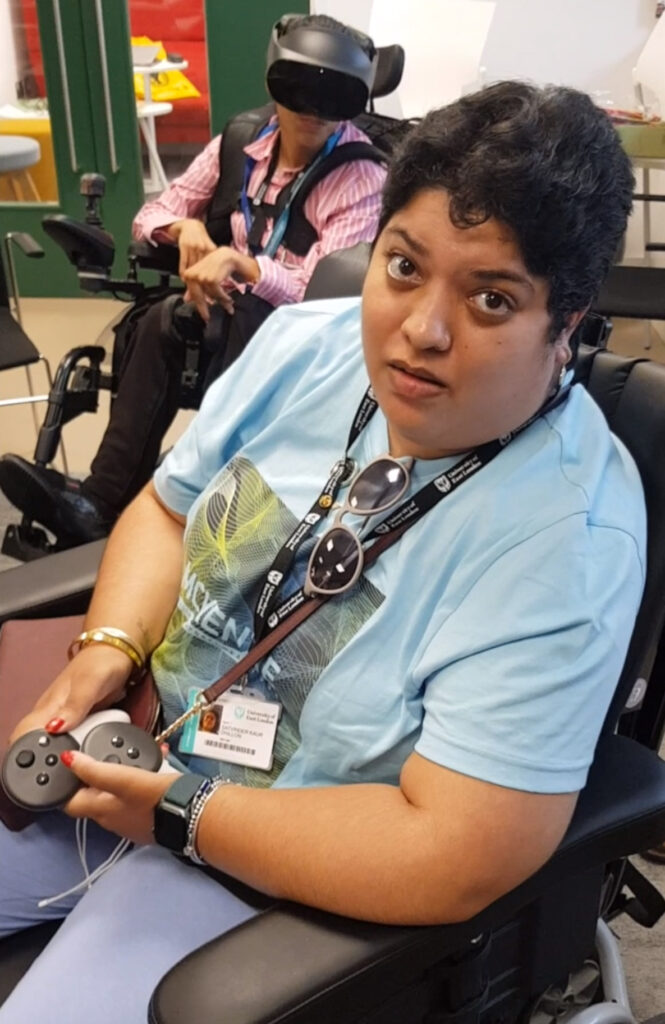
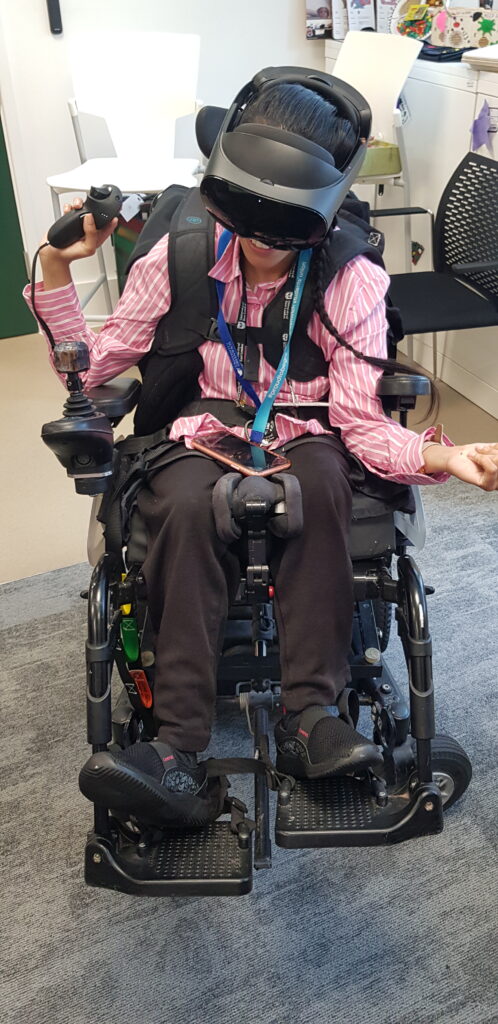
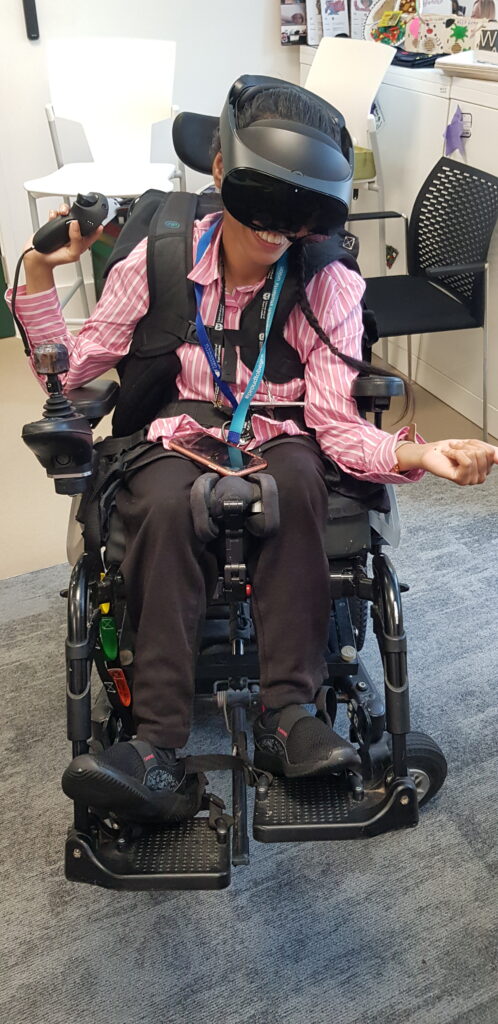
    We ran our first VR workshop specifically for wheelchair users this week, giving two of our co-researchers a taste of virtual reality. You can see one of our researchers below using the Meta Quest Pro to explore one of the spaces:

    The space that she looked at originally was a simple introductory space in the meata Quest Horizon worlds:

    https://youtube.com/shorts/sERSt8JaApU

    The VR workshops are guided by multiple, overlapping goals including the exploration of virtual spaces such as environments that wheelchair users would not be able to easily accomplish in the physical world, looking at some of the issues that accompany standard controllers that are supplied with the VR headsets and exploring ways of making VR more inclusive.

    Exploring virtual Japan

    Wearing the headsets did not cause too much concern (although both are fairly heavy), as they are both adjustable and with reasonable padding. However, the controllers appeared to be difficult to hold and the buttons and joysticks hard to manipulate particularly if you have limited manual dexterity. In the video below, you can see that the controls on the VR controller need some improvement – something that we are currently working on.

    After we had looked at a few of the virtual worlds (mostly from the set of Horizon worlds intstalled on the headset) we asked our researchers “If you could do anything in a virtual space, what would you choose to do?” The responses were interesting. One said she’d like to be ‘Michael Jackson’s hat for a day’ and experience what he sees on stage, and the other was a little more down to Earth, experiencing being in Kenya and possibly a VR cooking experience which she talks about in the video below:

  • New RixTalk Talking Ruler

    After creating the initial prototype of the talking ruler and considering some of the early feedback given to me by people who have seen the device work, the new version is now on its way. This is now a self-contained unit that includes speakers, audio player, microcontroller and battery.

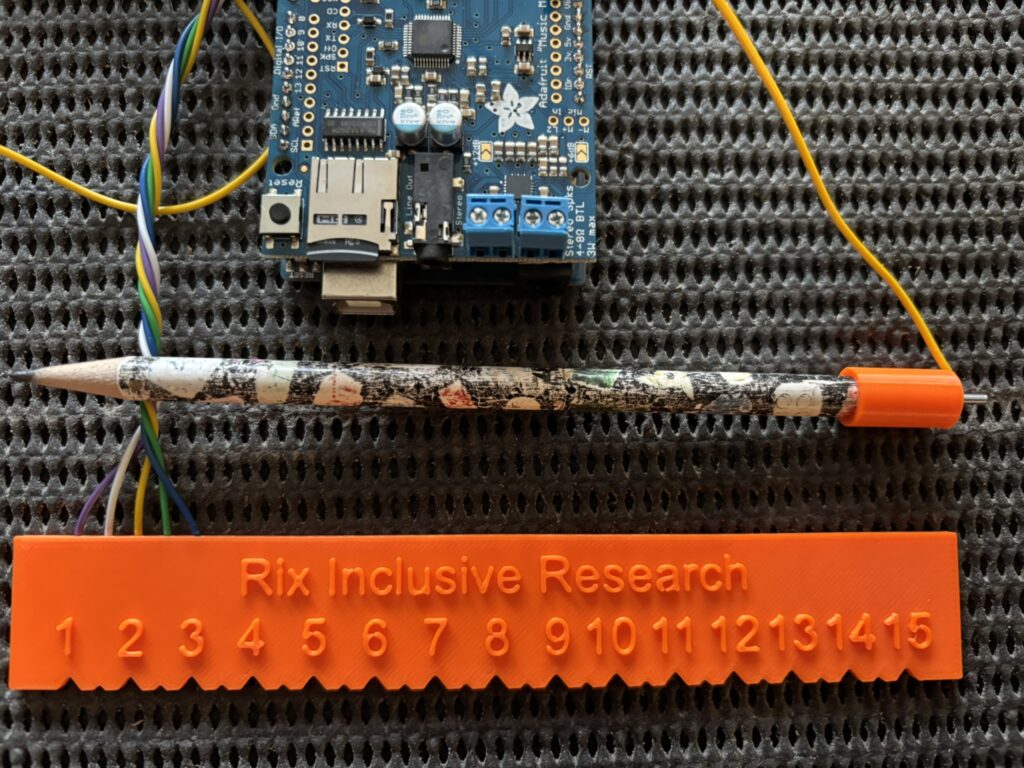
    The first version of the talking ruler worked quite effectively and produced a good clear sound, but suffered from having external wires, an external microcontroller and audio player:

    Old version of talking ruler.

    As the image above shows, the first version of RixTalk used an Arduino Uno R3 together with the brilliant Adafruit MP3 player shield (super audio quality). A standard HB pencil was wired to the Uno via a simple 3D printed cap, and the contact points on the ruler (that are touched by the pencil) are wired to the analog ports. It worked well, but was rather cumbersome with all the external wires and external microcontoller.

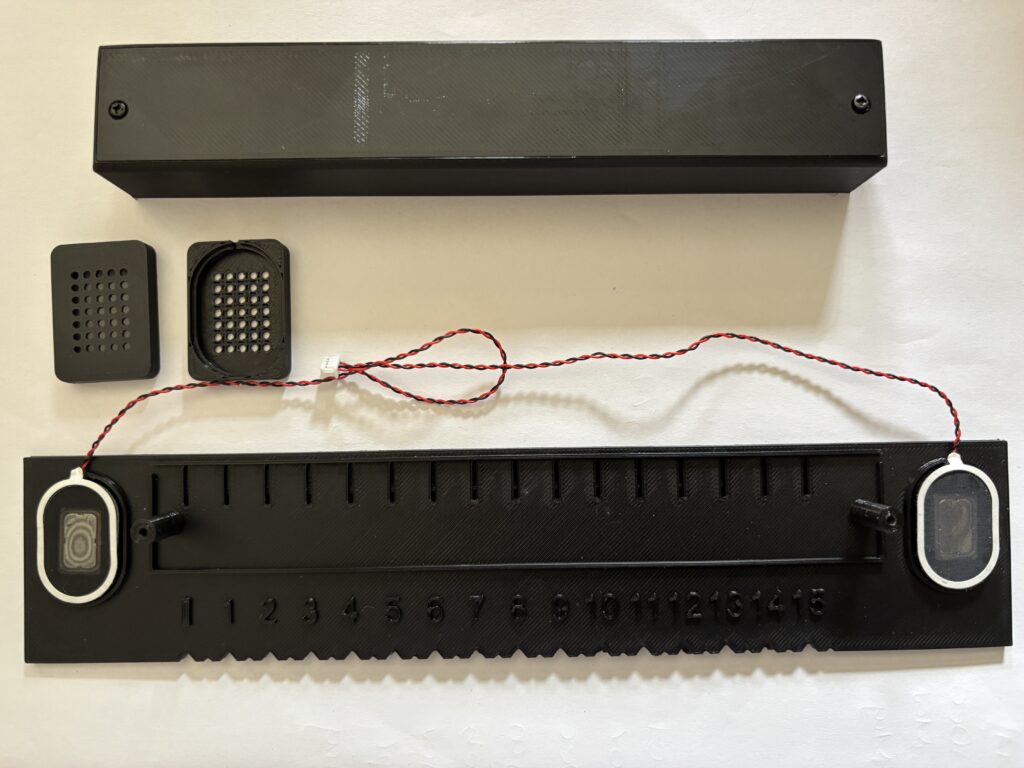
    The new version of RixTalk (let’s call it RixTalk2) is self-contained, with the speakers integrated into the ruler itself, and all electronics contained within a housing that is screwed to the ruler. The new version uses digital ports on the Pico, as there were not enough analog ports available. All of the components are 3D printed using a Prusa Mk4S.

    Note that the first notch on the ruler is a locater for 0 mm. The remaining notches are either large (every 10mm) or small (between each large notch). The large notches represent lengths at 10mm, 20mm, 30mm, etc., and play audio sounds for each one. The small notches are for lengths 5mm, 15mm, 25mm, etc., but do not play sounds.

    Plastic components of talking ruler together with speakers.

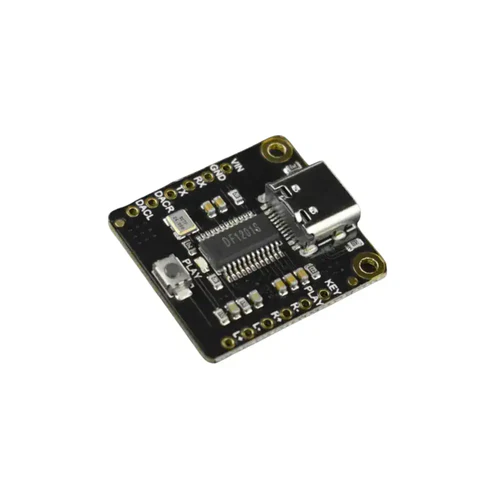
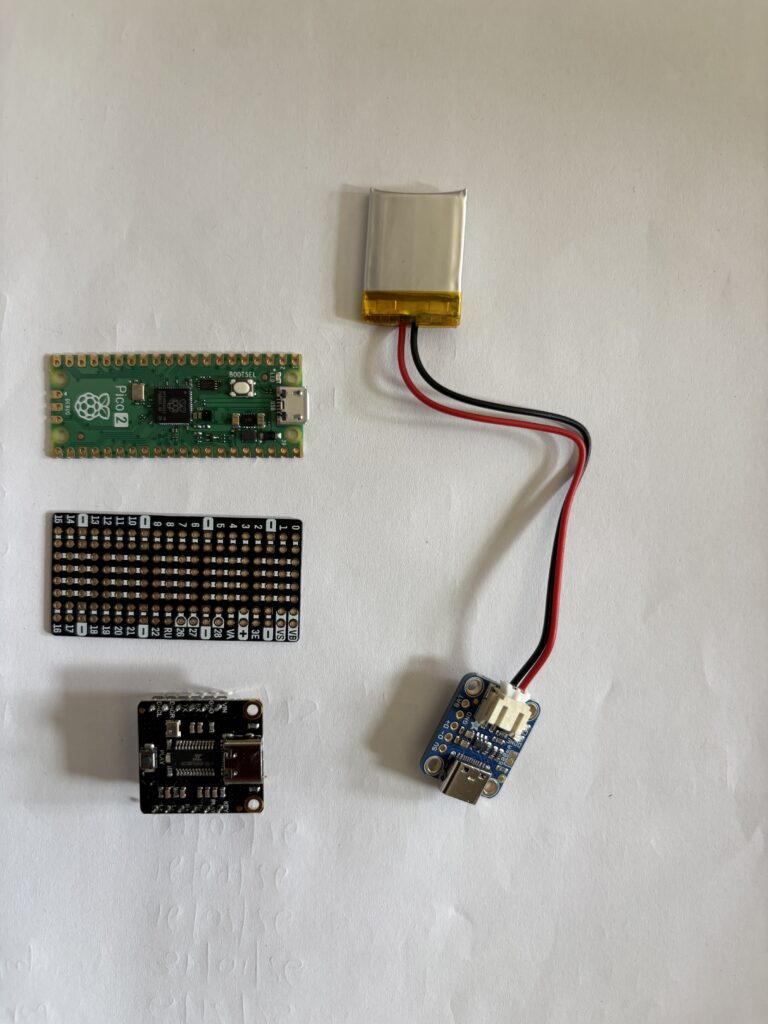
    Internally, the microcontroller is a standard Raspberry Pi Pico Mk2 (i.e. not wireless), the MP3 decoding and playback is taken care of by a Fermion MP3 module, using simple AT (ATtention) commands via one of the UARTs on the Pico:

    Fermion MP3 player module.

    The Fermion is connected to a pair of 2W speakers that are located at either end of the ruler, and is controlled directly by the Pico. Both Pico and MP3 player are powered using a single 3.7V 150 mAh LIPO battery that is connected to an Adafruit lipo charger module:

    Electronics inside talking ruler.

    The Pico and Fermion site side-by-side on a piece of stripboard (not the nice little Pi Hut board above – that was too small), which is used to connect everything together.

    The audio was generated using an AI text to speech engine, with an English sounding female voice. Each number was generated individually and stored as an MP3 file on the Fermion player.

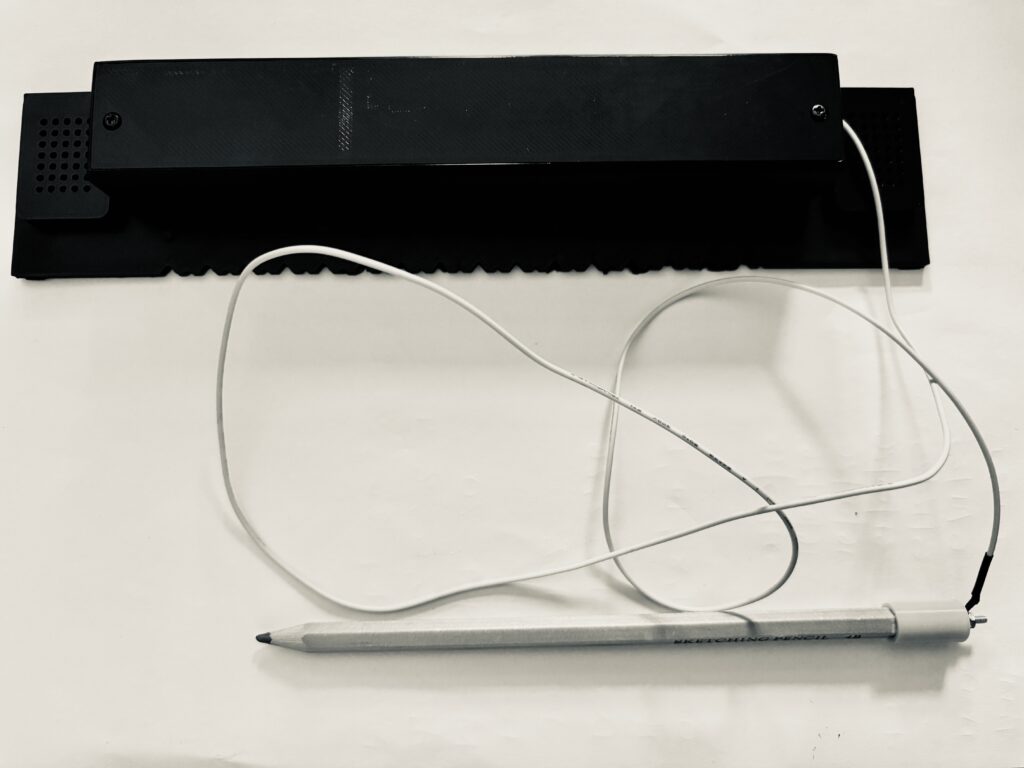
    The image below shows the RixTalk talking ruler assembled, together with a 3B pencil. A 3B is being used as it gives better conductivity.

    RixTalk talking ruler with pencil attached.

    The talking ruler has yet to be tested out with end users, but that should not be too far ahead.