
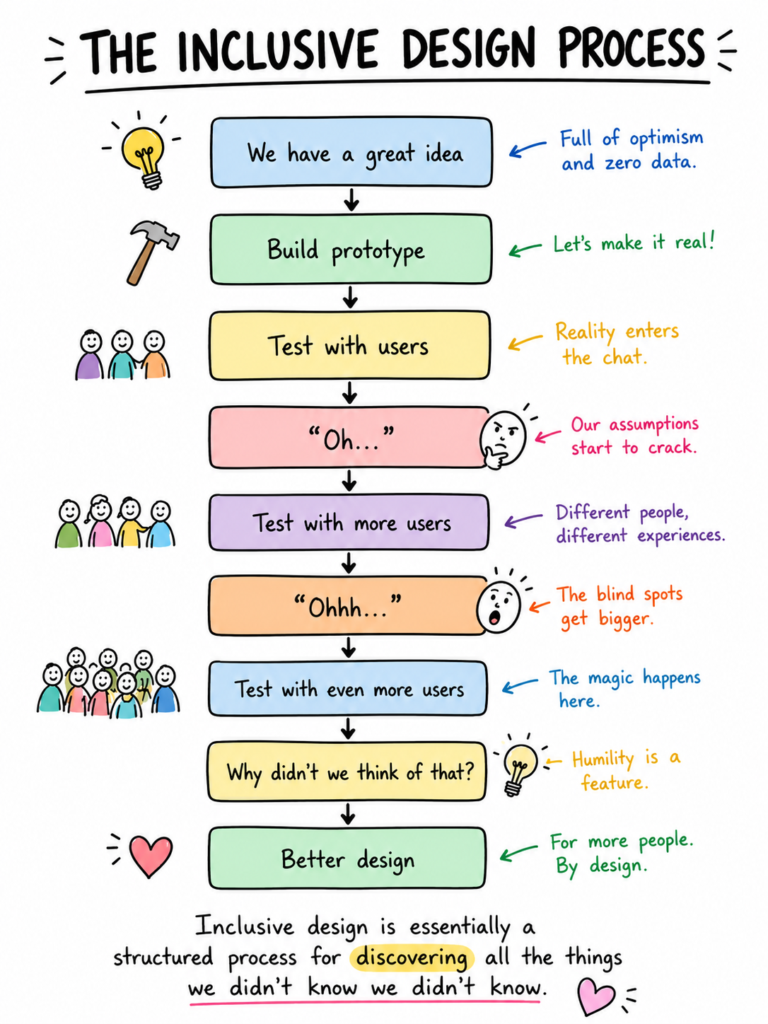
For one of the Summer School Talks, I created this simple flowchart (with a little help from AI) for the Inclusive Design Process, highlighting how unexpected discoveries in inclusive design can emerge through involving more diverse audiences in the process, keeping an open mind, being prepared to modify our assumptions and listening for new opportunities. It’s hard to keep an open mind, but some of the greatest ‘inventions’ have been discovered that way.
What is Inclusive Design Anyway?
Inclusive design is often less about having the right answer from the start and more about creating opportunities to discover what we have overlooked. The process begins with a promising idea and a prototype (many of mine came about from sketches on beer mats and scribbles during conversations), but the real learning starts when we put that prototype in front of users. Initial testing often reveals unexpected barriers, assumptions, and blind spots – the first “Oh…” moment. As we engage with wider and more diverse groups of people, our understanding deepens, leading to the inevitable “Ohhh…” moment when we realise how many different ways people experience the world. These discoveries are not failures. They are valuable insights that help us design better solutions. In this sense, inclusive design is a structured process for uncovering what we didn’t know we didn’t know, transforming assumptions into understanding and creating products, services, and experiences that work for more people by design.