
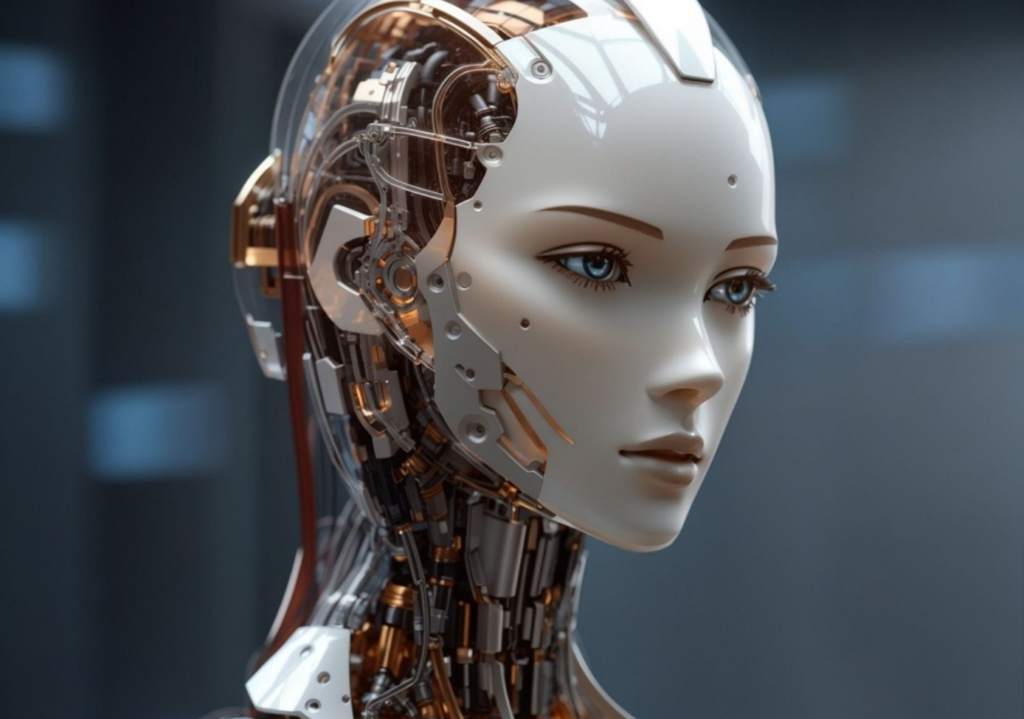
A few weeks ago, while sitting in a coffee shop in Norwich, I found myself thinking about how all of us might play a role in shaping the future of robotics. I was trying to make sense of where robots might be heading over the next decade and beyond. What emerged, over the course of several coffees (and perhaps too much cake), was something that began to resemble a Bauhaus Manifesto for Robotics.
A Different Starting Point
Much of today’s robotics research focuses on making robots more capable, more autonomous, and more intelligent. These are important goals. However, they often assume that people will adapt to the way robots work.
Users are expected to learn new interfaces, understand unfamiliar (and often highly technical) concepts, remember command structures, or communicate in ways that fit the designer’s vision of how the robot should be used. These systems can also be quite closed, leaving some people excluded from meaningful participation.
But what if we reversed that relationship?
What if robots were designed to adapt to the diversity of people instead?
This simple shift in perspective changes everything. It suggests that inclusion should not be treated as a specialist area within robotics; it should be one of the foundations upon which robotics, and arguably most technologies, are built.
Nothing Abous Us, Without Us (or Designing With, Not For)
I have been fortunate to work alongside people at Rix Inclusive Research with learning disabilities and other disabled communities (such as with the Tower Group) as collaborators (co-researchers) rather than participants. Frequently they have shown that the most innovative ideas often emerge from people who have traditionally been excluded from the design process, but they are the ones with the lived experience of disability. So they are exactly the right people to inform us of how our devices should be designed.
This principle sits at the heart of Inclusive Human-Robot Interaction (IHRI). Rather than asking only how robots can help disabled people, perhaps we should also be asking how disabled people can help shape the next generation of robots.
Their experiences of navigating barriers, adapting to environments, and communicating in diverse ways provide insights that robotics is only beginning to recognise. Inclusion is not simply about removing obstacles; it is about discovering better ways for everyone to interact with technology.
Communication Is More Than Commands
One theme repeatedly occurred throughout our recent Robot Lab workshops – people don’t really think in terms of programming a robot (not even with our simple RixBot), but think more in terms of speech, gesture, movement, touch, demonstrating action, some form of shared understanding and the use of context. This means that if robots are to become genuine partners in everyday life, they must become equal communicators and be able to express what they intend to do. Ideally, they should be capable of explaining uncertainty and should invite collaboration rather than simply execute instructions or commands. The future of robotics may depend as much on communication as it does on computation.
The Norwich Principles
The time spent in the coffee shop in Norwich also led to the beginnings of what I’ve started thinking of as The Norwich Principles of Inclusive Robotics (only because I was in a coffee shop in Norwich, and it sounds quite appropriate). These are not really intended to be fixed rules but emerging ideas that continue to evolve through research, workshops and conversations with colleagues and participants.
At their heart is a simple belief:
- Robots should adapt to people, not the other way around.
- Inclusion should be considered from the first sketch or idea, not the final stage.
- Communication should be multimodal and flexible.
- People with lived experience of disability should be central in helping to shape the future of robotics.
- Diversity should be viewed as a source of innovation.
- Trust should be designed through transparency.
- Accessibility is not a feature, but is the foundation.
Looking Forward
Over the coming months/years I hope to explore many of these ideas through participatory workshops, publications and (hopefully) funding proposals centred on Inclusive Human-Robot Interaction. But this work is still evolving, and there are many questions we do not yet have answers to. Perhaps that is exactly where research should begin?
Nearly a century ago, the Bauhaus movement challenged accepted ideas about architecture and industrial design by placing people, function and society at the heart of creative practice. Robotics now finds itself at a similar moment. Artificial intelligence is advancing rapidly. Robots are becoming more capable every year. Yet capability alone does not guarantee inclusion. The future of robotics will not be defined solely by how intelligent our machines become. It will be defined by who gets to shape them, their abilities and how we communicate with them. My hope is that Inclusive Robotics can become more than a research topic and more of a way of thinking.